Space
Space near Naples: planetariums, dark skies and star parties
Fort Myers’ planetarium, Big Cypress dark skies, Everglades star nights and the Naples stargazers.
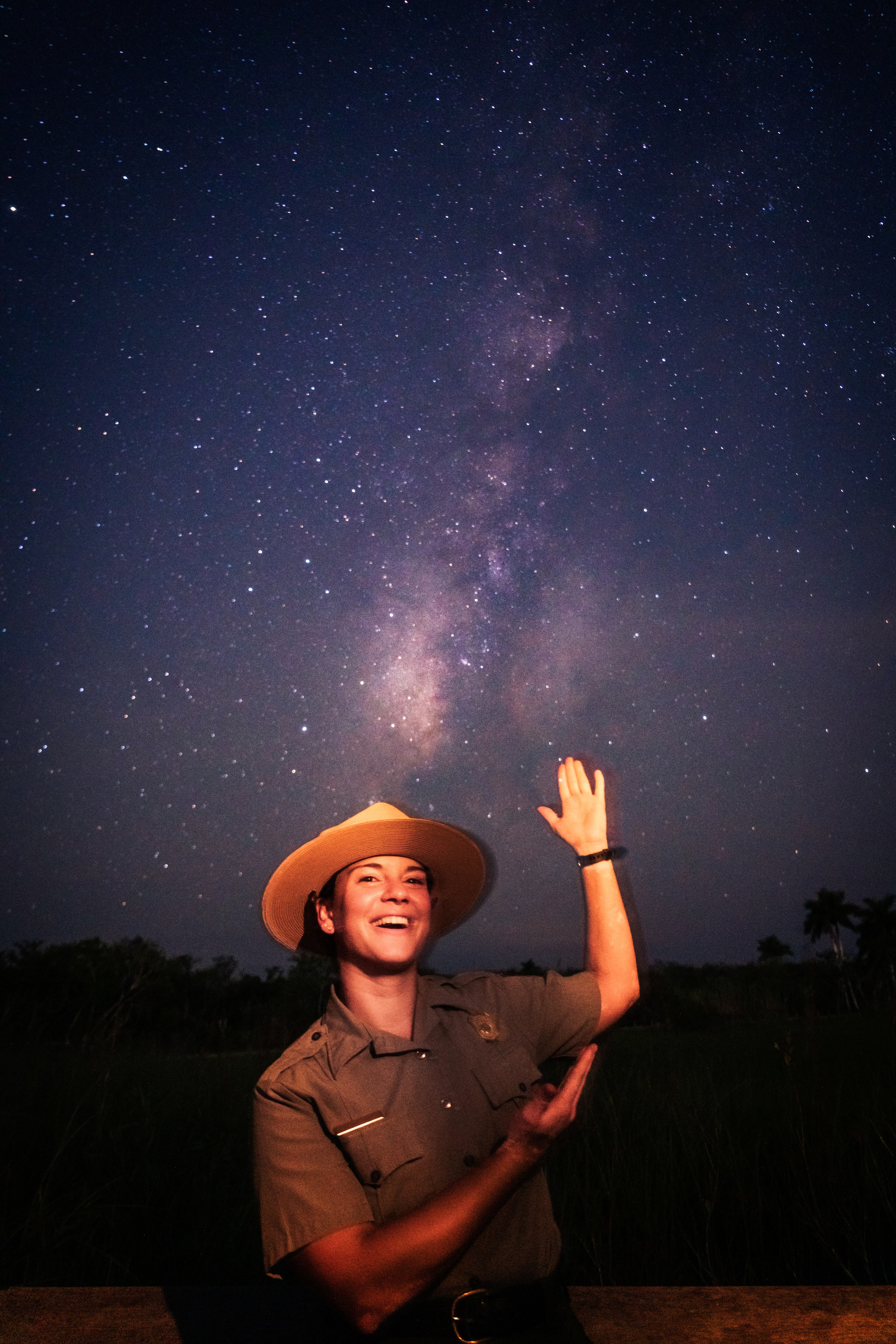
Photo Credit
Image courtesy of © National Park Service (Everglades National Park), public domain, via Wikimedia CommonsSouthwest Florida has two things astronomers love: a flat horizon and, just inland, some of the last protected night skies in the south of the state. Here are the planetarium in Fort Myers, the dark-sky programmes of Big Cypress and the Everglades, and the Naples club that runs public star nights, each checked with the venue or park.
A coast that faces the dark
Naples looks west over the Gulf of Mexico, and east of town the lights give out quickly into cypress swamp and sawgrass. That darkness is not an accident of emptiness; it is protected.
Big Cypress National Preserve worked for years on its lighting before it was recognised as an International Dark Sky Place, and it now offers open nights under some of the last protected skies in south Florida, where the Milky Way appears without any equipment at all.
Calusa Nature Center & Planetarium, Fort Myers
The nearest dome is in Fort Myers, at 3450 Ortiz Avenue. The centre says its planetarium is the only one open to the public along the western half of Florida south of Bradenton. It has a Digitarium Lambda Plus laser projection system, 5.1 surround sound and new rocker-back velour seats with 42 inches of legroom, which is more than most airlines manage.
The centre opens Tuesday to Sunday, 10 am to 4 pm, with admission listed at $13 for adults and $7 for children, and the daytime planetarium shows are included, rotating each month. There is no entry once a show has started, so arrive early. Evening specials include a Pink Floyd programme set to The Dark Side of the Moon, which is either the most or least appropriate soundtrack for a planetarium, depending on your view of 1973.
Big Cypress National Preserve: an International Dark Sky Place
In 2016 Big Cypress became the first National Park Service unit east of Colorado to be named an International Dark Sky Place, and the 16th park unit in the country to earn it. Its staff wrote outdoor-lighting guidelines covering when and where light is truly needed, the kind of quiet housekeeping that keeps the galaxy visible.
For winter 2026 to 2027 the preserve runs night-sky programmes, at no charge, once a month in December, January, February and March: constellation tours and, weather permitting, telescope views of stars, clusters, planets, nebulae and galaxies, with local amateur astronomers. They meet at the end of Seagrape Drive, on the east side of the Nathaniel P. Reed Visitor Center, 33000 Tamiami Trail East, Ochopee.
If the weather turns, the programme moves into the visitor centre auditorium, first come, first served.
Winter is stargazing season here: the ranger night-sky programmes run from December to March.
The Everglades after dark
Everglades National Park says its minimal light pollution gives stunning views of stars, planets and constellations. Its Dark Sky Celebration is listed for 19 to 27 February 2027, with a Dark Sky Festival on Saturday 27 February; the park says the programme is still being finalised. In winter, rangers also run night programmes including new-Moon stargazing, at which telescopes may be available.
Bring a torch with a red filter, and remember that the Everglades’ other residents are also out at night.
The Everglades Astronomical Society
The Naples club meets at 7 pm on the second Tuesday of the month, September to June, at the Collier Government Center, at Airport Road and Orange Blossom. It runs public outreach evenings at Collier-Seminole State Park, where a talk on the constellations is followed by a look through members’ telescopes, and star parties at its own dark-sky site for members and invited guests.
Anyone thinking of buying a telescope can get advice there from people who have already made the expensive mistakes.
Further afield: Miami’s Frost Planetarium
For a full-dome show on a grand scale, the Frost Planetarium at Phillip and Patricia Frost Museum of Science in Miami has a 67-foot dome tilted at 23.5 degrees, like a head craned back at the sky, and an 8K projection system; planetarium seats are reserved on site on the day.
Why the dark is worth protecting
Every new road brings new lights. Big Cypress shows the alternative: shielded, amber, only where needed. Spend one evening on Seagrape Drive and the argument makes itself, because once you have seen the Milky Way rise over the cypress, the glow of a car park will never look quite the same again.
Why it's on our list
- Calusa Nature Center & Planetarium, Fort Myers
- Big Cypress, an International Dark Sky Place
- Ranger night-sky programmes, December to March
- The Everglades Dark Sky Celebration
- Star nights with the Everglades Astronomical Society
Location
The map comes from Google Maps, which sets its own cookies once it loads.
More in depth
 ScienceAI in space: the machines that land, steer and exploreSelf-landing rockets, Starship, Artemis and the AI driving Perseverance: space exploration in 2026.
 SpaceHubble, Webb and the great telescopesFrom Hubble’s flawed mirror to Webb, Roman, Rubin and the ELT: how telescopes changed our place.
 SpaceLook up: the great observatories, planetariums and science museumsObservatories, planetariums and space galleries from London to Maunakea, and how to visit them.